JH
Jason Hartwell
Men's Performance and Nutrition Specialist 15+ Years in Natural Testosterone Optimization
Updated 25 Jun 2026
Section 01
Why Testosterone Declines - and Why It Is Accelerating
Testosterone decline is a normal part of male ageing - levels begin falling at roughly 1-2% per year from the mid-thirties onward. But what has changed dramatically in recent decades is the rate at which this decline occurs, and the age at which it begins. Research published in the Journal of Clinical Endocrinology and Metabolism found that testosterone levels in today's men are significantly lower than in men of the same age just 20 years ago - independent of age itself.
This is not simply getting older. It is a combination of modern lifestyle factors - chronic stress, disrupted sleep, sedentary work, poor nutrition, and increasing exposure to endocrine-disrupting chemicals - that are suppressing testosterone at the biological level across the male population. Understanding the causes is the foundation for doing something about them.
1-2%
average testosterone decline per year after age 35
20%
lower testosterone in men today vs men of same age in 1980
40%
of men over 45 have clinically low testosterone
The Primary Drivers of Testosterone Decline
While genetic predisposition sets a baseline, the factors below are the modifiable drivers responsible for most of the decline seen in contemporary men:
- Chronic sleep deprivation: The majority of testosterone production occurs during deep (slow-wave) sleep. Consistently sleeping fewer than 7 hours reduces testosterone by up to 15% per week - the equivalent of ageing 10-15 years hormonally.
- Elevated cortisol: Cortisol and testosterone share an inverse relationship. Chronic psychological stress keeps cortisol chronically elevated, directly suppressing the hypothalamic-pituitary-gonadal (HPG) axis that governs testosterone production.
- Excess body fat: Adipose (fat) tissue contains aromatase, the enzyme that converts testosterone to oestrogen. Higher body fat directly reduces free testosterone and increases oestrogen - accelerating the hormonal decline.
- Sedentary lifestyle: Resistance training is one of the most potent acute stimulators of testosterone. A predominantly sedentary lifestyle removes this stimulus almost entirely, allowing baseline levels to drift steadily downward.
- Endocrine-disrupting chemicals (EDCs): Plastics (BPA, phthalates), pesticide residues, and household chemicals act as xenoestrogens - chemicals that mimic or displace oestrogen in the body. Cumulative daily exposure is now recognized as a significant contributor to declining male hormone levels.
- Nutritional deficiencies: Zinc and vitamin D are essential co-factors for testosterone synthesis. Deficiency in either - extremely common in Western men - directly impairs production at the enzymatic level.
"Testosterone does not simply disappear with age. It is driven down by a specific set of lifestyle and environmental factors - most of which are directly within your control."
Section 02
How Testosterone Actually Works
What actually matters - and what doesn't. Most men focus entirely on total testosterone when they get bloodwork done. But free testosterone, SHBG levels, and the testosterone-to-cortisol ratio are often more predictive of how you actually feel and perform. This section clarifies what to track and why.
Testosterone is produced primarily in the Leydig cells of the testes, under the direction of the hypothalamic-pituitary-gonadal (HPG) axis. The hypothalamus releases GnRH, which signals the pituitary to release LH and FSH, which in turn stimulate testosterone production in the testes. This feedback loop is highly sensitive to lifestyle inputs - meaning the right interventions can meaningfully increase production within weeks.
Free vs Total Testosterone - Why the Distinction Matters
Most testosterone in the bloodstream (approximately 98%) is bound to proteins - primarily sex hormone-binding globulin (SHBG) and albumin. Only the remaining 2-3%, known as free testosterone, is biologically active and able to bind to androgen receptors in muscle, brain, and other tissues. A man can have normal total testosterone but genuinely low free testosterone due to elevated SHBG - and experience all the symptoms of low T as a result.
Key Hormone Markers to Understand
- Total testosterone: All testosterone in the blood, bound and unbound. The standard lab measure - but not the whole picture.
- Free testosterone: The biologically active fraction. More predictive of energy, libido, muscle gains, and mood than total T.
- SHBG (Sex Hormone-Binding Globulin): High SHBG binds more testosterone and reduces free T. Elevated by chronic stress, low calorie intake, and ageing. Reduced by resistance training and zinc.
- LH (Luteinising Hormone): The signal from the pituitary that drives testicular testosterone production. Low LH suggests the problem is upstream (hypothalamic or pituitary).
- Oestradiol (E2): Men need some oestrogen, but elevated E2 suppresses the HPG axis and is often elevated in men with high body fat.
- Cortisol:testosterone ratio: A better predictor of anabolic state, recovery capacity, and overall hormonal health than testosterone alone.
What Does Testosterone Actually Do?
Testosterone is far more than a "sex hormone" - it is the primary anabolic hormone governing male physiology across multiple systems:
| System |
Role of Testosterone |
Low T Symptom |
| Musculoskeletal |
Drives muscle protein synthesis and bone density |
Reduced muscle mass, increased injury risk |
| Metabolic |
Promotes fat oxidation, regulates insulin sensitivity |
Increased abdominal fat, insulin resistance |
| Neurological |
Supports dopamine, motivation, focus and cognitive speed |
Low drive, poor concentration, mood changes |
| Cardiovascular |
Red blood cell production, cardiac muscle health |
Reduced stamina, fatigue |
| Reproductive |
Libido, erectile function, sperm production |
Low libido, erectile difficulties |
| Psychological |
Confidence, competitive drive, stress resilience |
Irritability, lack of motivation, anxiety |
Section 03
Training for Maximum Testosterone Response
Resistance training is the single most powerful natural stimulus for acute testosterone elevation. But not all training is equal in its hormonal effect - the exercise selection, load, volume, and rest periods all determine the magnitude of the testosterone response.
The Training Variables That Drive the Biggest Hormonal Response
-
1
Compound Exercises at High Relative Intensity
Exercises that recruit the largest muscle groups - squats, deadlifts, bench press, rows, overhead press - produce the strongest testosterone response. The hormonal signal is proportional to the amount of muscle mass activated. Isolation exercises produce a fraction of the hormonal stimulus of compound movements at similar effort levels.
-
2
Loading at 70-85% of One-Rep Maximum
Research consistently shows peak testosterone response occurs in the moderate-heavy loading range (6-12 reps at 70-85% 1RM). Very light loads fail to produce sufficient mechanical tension. Maximal loads (1-3 rep) with excessive rest periods shift the response toward neural adaptation rather than hormonal. The sweet spot for both muscle and hormone response is progressive moderate-to-heavy volume.
-
3
Short to Moderate Rest Periods (60-120 Seconds)
Shorter rest periods maintain elevated metabolic stress between sets, which is a potent driver of anabolic hormone release. Very long rest periods (3+ minutes) blunt the hormonal response. For testosterone optimization, 60-90 seconds rest between sets in compound movements maintains the necessary metabolic environment.
-
4
Training Frequency and Recovery Balance
3-4 full-body or upper/lower split sessions per week produces optimal chronic testosterone adaptations. Overtraining - more than 5-6 high-intensity sessions per week without adequate recovery - begins to suppress testosterone and elevate cortisol. Recovery is where the adaptation occurs, not during the session itself.
Training Protocols With the Strongest Testosterone Evidence Base
- Barbell squat variations: 4-5 sets of 6-10 reps at 75-80% 1RM - highest testosterone response of any single exercise
- Deadlift variations: comparable hormonal stimulus to squat; total body recruitment creates strong anabolic signal
- Olympic lifts (clean, snatch): high power output combined with large muscle recruitment = potent hormonal stimulus
- High-intensity interval training (HIIT): 15-20 min sessions 2x/week produce acute testosterone spikes; more than this begins to raise cortisol
- Excess steady-state cardio (60+ min, multiple times per week): associated with lower testosterone and higher cortisol in multiple studies - use sparingly
Section 04
Nutrition and Testosterone
Diet is not a secondary consideration for testosterone optimization - it is foundational. The hormonal system is built from dietary raw materials. Without adequate dietary fat (particularly saturated and monounsaturated fat), the body lacks the cholesterol precursors required for testosterone synthesis. Without zinc and vitamin D, the enzymatic machinery cannot function. Without sufficient calories, the HPG axis downregulates production as a protective response to perceived starvation.
Getting nutrition right is the difference between a hormonal environment that supports everything you are trying to achieve in the gym, at work, and in life - and one that works against you regardless of how hard you train.
The Key Nutrients for Testosterone Production
| Nutrient |
Role in Testosterone |
Deficiency Impact |
Best Sources |
| Zinc |
Essential co-factor for testosterone synthesis; inhibits aromatase |
Up to 75% reduction in testosterone |
Oysters, beef, pumpkin seeds |
| Vitamin D |
Acts as a steroid hormone; directly regulates T production |
25-30% lower testosterone in deficient men |
Sunlight, oily fish, egg yolks |
| Saturated and Monounsaturated Fat |
Cholesterol precursor to all steroid hormones including testosterone |
Low-fat diets consistently associated with lower T |
Red meat, eggs, olive oil, avocado |
| Magnesium |
Reduces SHBG binding, increasing free testosterone |
Reduced free testosterone; poor sleep quality |
Dark greens, nuts, dark chocolate |
| Selenium |
Antioxidant protection of Leydig cells; sperm production |
Reduced testicular function |
Brazil nuts (1-2 per day) |
| Omega-3 Fatty Acids |
Reduces systemic inflammation that suppresses the HPG axis |
Elevated inflammatory markers, reduced T |
Oily fish, flaxseed, walnuts |
Dietary Patterns That Consistently Raise vs Suppress Testosterone
- Raises testosterone: Higher dietary fat (35-40% of calories), adequate protein (1.6-2.2g/kg bodyweight), caloric sufficiency, cruciferous vegetables (reduce oestrogen), garlic (reduces cortisol), pomegranate (clinical evidence for testosterone elevation).
- Suppresses testosterone: Very low-fat diets, chronic caloric restriction, excess alcohol, high-sugar/high-glycaemic diets (elevate insulin and suppress LH), soy isoflavones in excess, licorice root, and spearmint tea.
Recommended Resource
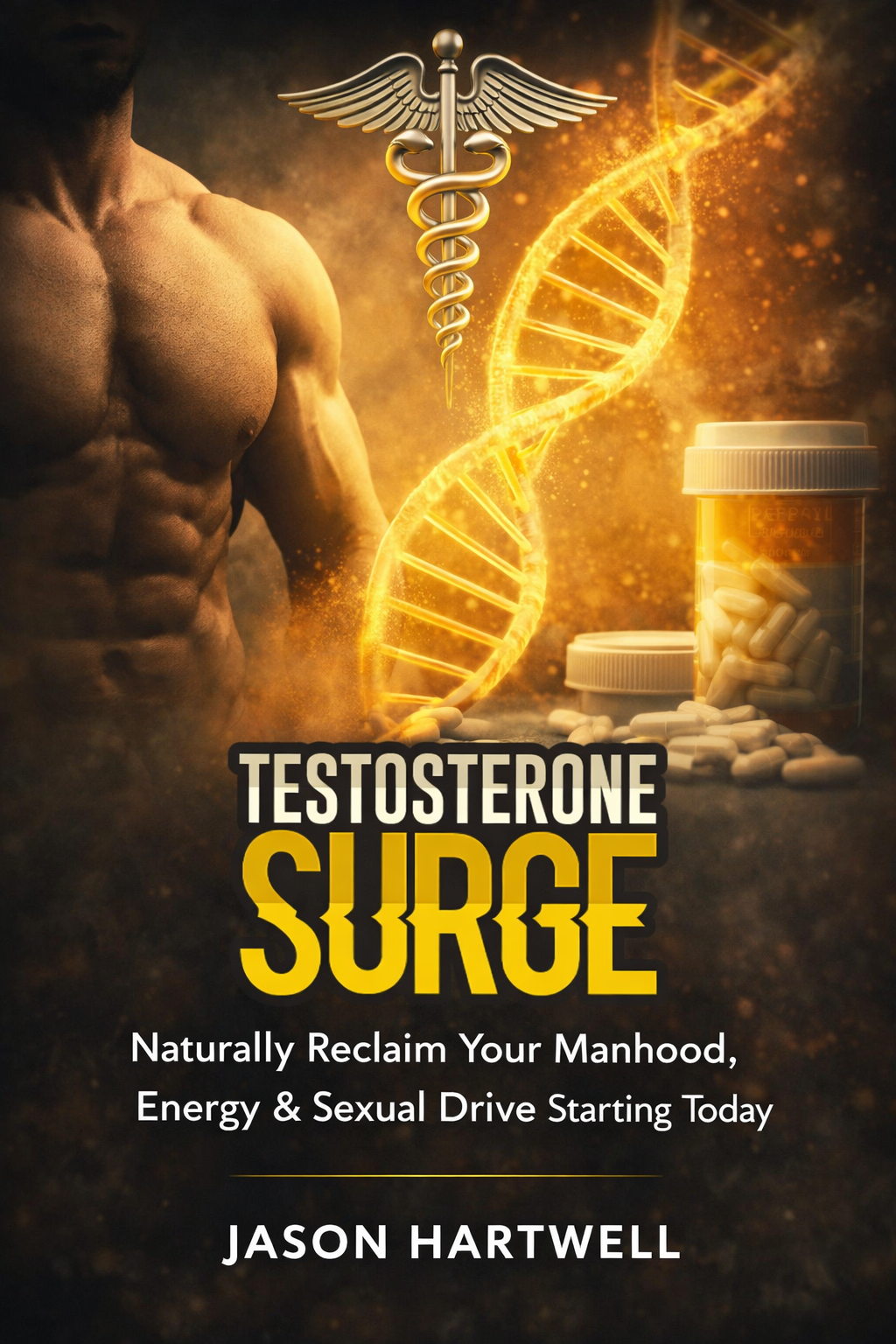
Testosterone Surge - Complete Nutrition and Training System
The Testosterone Surge guide includes a complete testosterone-optimizing nutrition plan, specific meal strategies by goal, supplement protocols that actually work, and a structured 90-day action plan.
Download Instantly
$19.95
Section 05
Sleep, Stress and Cortisol - The Hidden Testosterone Killers
Let's be honest: most men optimize their training and nutrition and then stay up until midnight scrolling a screen, sleep 5-6 hours, and grind through chronic work stress without addressing it. Then wonder why their results plateau. Sleep and stress management are not optional add-ons. For testosterone, they are non-negotiable.
Why Sleep is Your Most Powerful Testosterone Intervention
Approximately 70% of the daily testosterone surge occurs during sleep, specifically during the REM and slow-wave (deep sleep) stages. A series of landmark studies at the University of Chicago demonstrated that restricting sleep to 5 hours per night for just one week reduced testosterone levels by 10-15% in healthy young men - the equivalent of ageing 10-15 years hormonally. The effect was fully reversible with sleep restoration.
For testosterone optimization, the quality of sleep is as important as the quantity. Deep slow-wave sleep - the stage where growth hormone and testosterone are most heavily secreted - is disproportionately sensitive to disruption from light exposure, alcohol, irregular sleep schedules, and sleep apnoea.
The Cortisol-Testosterone Relationship
Cortisol and testosterone operate on a seesaw. They share the same precursor hormone (pregnenolone), meaning that chronically elevated cortisol production diverts resources away from testosterone synthesis - a phenomenon sometimes called "pregnenolone steal." Beyond this direct competition, cortisol also directly inhibits the HPG axis at the hypothalamic level, reducing GnRH pulsatility and suppressing the LH signal that drives testicular testosterone production.
Evidence-Based Sleep and Stress Targets for Testosterone Optimization
- Sleep duration: minimum 7 hours; 8-9 hours produces the highest testosterone secretion in research
- Sleep consistency: going to bed and waking at the same time daily regulates the circadian cortisol rhythm, which directly interacts with T production
- Light exposure: avoid blue light from screens for 60-90 minutes before bed - it delays melatonin onset and disrupts the hormonal cascade of deep sleep
- Room temperature: core body temperature drops during deep sleep; a cool room (17-19 degrees C) significantly improves slow-wave sleep depth
- Alcohol: even moderate consumption (2-3 drinks) reduces testosterone by 6-10% and disrupts sleep architecture significantly - particularly REM sleep
- Stress management: daily mindfulness, deliberate relaxation, or structured breathwork reduce resting cortisol - with measurable testosterone effects within 4-6 weeks
Section 06
Lifestyle and Environmental Factors
Beyond training, nutrition, and sleep, a range of daily lifestyle choices and environmental exposures are measurably affecting testosterone across the male population. Many of these operate below conscious awareness - but their cumulative impact is significant and increasingly documented in peer-reviewed research.
Endocrine-Disrupting Chemicals in Daily Life
Endocrine-disrupting chemicals (EDCs) are compounds that interfere with the hormonal signalling system by mimicking, blocking, or altering natural hormones. Hundreds of commonly used synthetic chemicals have EDC properties - with bisphenols (BPA), phthalates, pesticide residues, and parabens representing the most ubiquitous and well-documented. Cumulative daily exposure from plastics, food packaging, personal care products, and household cleaners is now recognized as a meaningful contributor to declining male testosterone levels at a population level.
Body Composition and Aromatisation
Fat tissue is metabolically active and contains the enzyme aromatase, which converts testosterone to oestradiol. Higher body fat percentage directly means higher aromatase activity - and lower testosterone. A 10% reduction in body fat percentage has been shown to produce meaningful increases in free testosterone in overweight men, independent of any other intervention. This creates a powerful positive feedback loop: lower testosterone increases fat accumulation, which increases aromatisation, which further reduces testosterone.
-
1
Reduce Plastic Exposure
Switch to glass, stainless steel, or ceramic food storage and drinking vessels. Never heat food in plastic containers. Avoid plastic-wrapped food where possible. Filter drinking water. These changes alone significantly reduce daily BPA and phthalate burden.
-
2
Choose Natural Personal Care Products
Conventional shampoos, deodorants, and skin products frequently contain phthalates and parabens. Switching to fragrance-free, paraben-free alternatives reduces transdermal EDC absorption meaningfully over time.
-
3
Increase Sunlight Exposure
Vitamin D deficiency is near-universal in northern latitudes during winter and common year-round in men with largely indoor lifestyles. Even 20-30 minutes of direct midday sun on large skin areas (back, chest, arms) significantly improves vitamin D status - and with it, testosterone production capacity.
-
4
Manage Body Composition Proactively
Maintaining body fat below 20% significantly limits aromatase activity. The combination of resistance training and a caloric-appropriate high-protein diet is the most evidence-supported approach. Crash dieting is counterproductive - rapid caloric restriction directly suppresses LH and testosterone production within days.
Section 07
Natural vs Medical Options: An Honest Assessment
The options available for addressing low testosterone range from lifestyle-first natural optimization through to testosterone replacement therapy (TRT). Here is an evidence-grounded overview of each approach - including what the research supports, what it does not, and what the trade-offs genuinely are.
This is the mistake most people regret: jumping to TRT before fully optimizing the natural foundations. Many men who go on TRT could have achieved comparable results through structured lifestyle intervention - and avoided the lifelong dependency and side effects that come with it.
| Approach |
Evidence |
Effect on T |
Trade-offs |
Cost |
| Testosterone Replacement Therapy (TRT) |
Very Strong |
Large (exogenous) |
Lifelong dependency; fertility suppression; cardiovascular risk |
$150 - 400/month |
| hCG Therapy |
Moderate |
Moderate (stimulates natural production) |
Requires prescription; less studied long-term |
$100 - 250/month |
| Clomiphene (Clomid) |
Good |
Moderate (blocks oestrogen feedback) |
Prescription only; mood side effects in some men |
$50 - 150/month |
| Targeted Resistance Training |
Very Strong |
Moderate-High (natural) |
Requires consistency and correct programming |
Gym membership cost |
| Sleep and Stress Optimization |
Strong |
Moderate (10-20% improvement) |
Requires habit change and discipline |
Free |
| Nutritional Correction (zinc, vitamin D) |
Strong |
Moderate-High if deficient |
Requires blood testing to identify deficiencies |
$20 - 50/month |
Testosterone Surge Guide
RECOMMENDED FIRST STEP |
Good evidence |
Moderate-High (full multi-system approach) |
None - natural, sustainable, no side effects |
$19.95
$39.99 one-time |
For the majority of men with low-to-moderate testosterone decline, a structured natural protocol addresses all the underlying drivers simultaneously - producing results comparable to mild TRT over 3-6 months, without the dependency, cost, or fertility impact. TRT remains the appropriate choice for men with clinically diagnosed hypogonadism who have exhausted natural optimization without sufficient improvement.
"A man who optimizes his sleep, trains correctly, eats for his hormones, and eliminates the lifestyle suppressors will out-perform the average TRT user in 6 months - and keep those gains for life without a prescription."